Notice: Function _load_textdomain_just_in_time was called incorrectly. Translation loading for the sina-ext domain was triggered too early. This is usually an indicator for some code in the plugin or theme running too early. Translations should be loaded at the init action or later. Please see Debugging in WordPress for more information. (This message was added in version 6.7.0.) in /home/bmgcreative/public_html/michaelwhiteesq.com/web/wp/wp-includes/functions.php on line 6131

Notice: Function _load_textdomain_just_in_time was called incorrectly. Translation loading for the wordpress-seo domain was triggered too early. This is usually an indicator for some code in the plugin or theme running too early. Translations should be loaded at the init action or later. Please see Debugging in WordPress for more information. (This message was added in version 6.7.0.) in /home/bmgcreative/public_html/michaelwhiteesq.com/web/wp/wp-includes/functions.php on line 6131

Notice: Function _load_textdomain_just_in_time was called incorrectly. Translation loading for the astra domain was triggered too early. This is usually an indicator for some code in the plugin or theme running too early. Translations should be loaded at the init action or later. Please see Debugging in WordPress for more information. (This message was added in version 6.7.0.) in /home/bmgcreative/public_html/michaelwhiteesq.com/web/wp/wp-includes/functions.php on line 6131

Warning: Cannot modify header information - headers already sent by (output started at /home/bmgcreative/public_html/michaelwhiteesq.com/web/wp/wp-includes/functions.php:6131) in /home/bmgcreative/public_html/michaelwhiteesq.com/web/wp/wp-includes/feed-rss2.php on line 8
Michael White Esq Just another WordPress site Sat, 05 Feb 2022 06:42:19 +0000 en-US hourly 1 https://wordpress.org/?v=6.9.4 Wheel Witness https://michaelwhiteesq.com.bmgcreative.com/wheel-witness/ https://michaelwhiteesq.com.bmgcreative.com/wheel-witness/#respond Tue, 01 Feb 2022 16:46:32 +0000 https://michaelwhiteesq.com.bmgcreative.com/?p=1185 In any prosecution for any criminal driving charge – i.e., DUI, fleeing and eluding – the State must prove that the accused drove the vehicle. If the State does not have this witness, the case is often dismissed. If an officer conducts a traffic stop for a violation that officer becomes the wheel witness. There …

Wheel Witness Read More »

The post Wheel Witness appeared first on Michael White Esq.

]]>

Wheel Witness

In any prosecution for any criminal driving charge – i.e., DUI, fleeing and eluding – the State must prove that the accused drove the vehicle. If the State does not have this witness, the case is often dismissed. If an officer conducts a traffic stop for a violation that officer becomes the wheel witness.

There are instances, however, when the police arrive at the scene of a crash, and everyone is out of their respective cars. If the crash they responded to involves two or more vehicles, then the drivers or the passengers of the vehicles that remained at the scene may be able in some cases to act as that wheel witness.  But if they cannot, the state lacks this crucial witness.

Moreover, pursuant to Florida’s Accident Report Privilege, any statement a driver makes to the police regarding the accident, is not admissible to prove that that individual actually drove. If you have been involved in a crash and criminal charges resulted, you must speak to an experienced attorney familiar with the nuances of this body of law. Call Michael White today for a free consultation.

The post Wheel Witness appeared first on Michael White Esq.

]]>
https://michaelwhiteesq.com.bmgcreative.com/wheel-witness/feed/ 0
Accident Report Privilege https://michaelwhiteesq.com.bmgcreative.com/accident-report-privilege/ https://michaelwhiteesq.com.bmgcreative.com/accident-report-privilege/#respond Tue, 01 Feb 2022 16:43:20 +0000 https://michaelwhiteesq.com.bmgcreative.com/?p=1183 In Florida, anyone involved in a traffic crash can be compelled to make a statement to the police about the crash. Because such statements are not considered voluntary – again the police can compel the statement — traffic crash reports are not admissible as evidence in any trial, civil or criminal nor are any statements …

Accident Report Privilege Read More »

The post Accident Report Privilege appeared first on Michael White Esq.

]]>

Accident Report Privilege

In Florida, anyone involved in a traffic crash can be compelled to make a statement to the police about the crash. Because such statements are not considered voluntary – again the police can compel the statement — traffic crash reports are not admissible as evidence in any trial, civil or criminal nor are any statements made by the drivers, owners and occupants of the vehicle in the accident to the police officer investigating the accident. Fla. Stat. §316.066.

This privilege often becomes an advantage in DUI, or Leaving the Scene crash cases. Often, the accused will be outside of the car when the police arrive. The officer typically conducts a crash investigation, and then a subsequent DUI investigation. If the driver admits during the accident portion of the investigation that he or she did drive, but makes no such statement during the DUI investigation, and there are no other witnesses placing the driver behind the wheel of the car, the State will face an uphill battle proving the driving element of the charge.

The accident report privilege does not apply to many statements and other evidence, such as:

  • Any communication made by eyewitnesses to the accident that were not “involved” in the crash
  • Findings and statements made in criminal or homicide investigation reports
  • Results of field sobriety tests, breath tests, and blood tests
  • Police officer’s tangible evidence findings at the crash such as distances, skid marks, resting places of people, cars, and other physical findings like bottles or paraphernalia
  • The identity of a driver involved in the crash when the accused claims he or she was not at the scene of the crash

The accident report privilege often can result in a case being dismissed, particularly when the officer does not inform the accused that the crash investigation is over and that he or she is now conducting a criminal investigation. If you have been involved in a crash and criminal charges resulted, you must speak to an experienced attorney familiar with the nuances of this body of law. Call Michael White today for a free consultation.

The post Accident Report Privilege appeared first on Michael White Esq.

]]>
https://michaelwhiteesq.com.bmgcreative.com/accident-report-privilege/feed/ 0
Veterans Courts https://michaelwhiteesq.com.bmgcreative.com/veterans-courts/ https://michaelwhiteesq.com.bmgcreative.com/veterans-courts/#respond Tue, 01 Feb 2022 16:39:52 +0000 https://michaelwhiteesq.com.bmgcreative.com/?p=1180 Veterans Courts (Fla. Stat. §§ 948.16 and 948.21)Veterans courts assist defendants with the complex treatment needs associated with substance abuse, mental health, and other issues unique to the traumatic experience of war. Some veterans returning home from war find it difficult to integrate back into the community due to untreated substance abuse or mental health issues, such …

Veterans Courts Read More »

The post Veterans Courts appeared first on Michael White Esq.

]]>

Veterans Courts

Veterans Courts (Fla. Stat. §§ 948.16 and 948.21)
Veterans courts assist defendants with the complex treatment needs associated with substance abuse, mental health, and other issues unique to the traumatic experience of war. Some veterans returning home from war find it difficult to integrate back into the community due to untreated substance abuse or mental health issues, such as post-traumatic stress disorder (PTSD), and thus find their return even more difficult, which sometimes leads to criminal activity.

By its name, veterans’ courts limit participation to both current and formal military members. Veterans courts involve the traditional participants in the court room – judge, prosecutor, public defender, probation, etc. – but also include a case manager and a treatment provider. Similarly, several veterans’ organizations, such as the Veterans Health Administration (VHA), also play a role. Importantly, at least one member of this team is someone with familiarity of both veteran and military culture, which helps when specific military issues arise.

Similarly, veterans’ courts include volunteer veteran mentors to assist their fellow veterans, and they provide many levels of support, such as helping the participant secure housing, employment, education, and transportation, to name a few. The goal is to get the participant in treatment and help them achieve sobriety in a non-adversarial setting.

The post Veterans Courts appeared first on Michael White Esq.

]]>
https://michaelwhiteesq.com.bmgcreative.com/veterans-courts/feed/ 0
Implied Consent and Refusal https://michaelwhiteesq.com.bmgcreative.com/implied-consent-and-refusal/ https://michaelwhiteesq.com.bmgcreative.com/implied-consent-and-refusal/#respond Tue, 01 Feb 2022 16:32:07 +0000 https://michaelwhiteesq.com.bmgcreative.com/?p=1176 Florida’s “Implied Consent” law governs the procedures the police must follow when asking an accused to submit to a breath, blood or urine test during a DUI investigation. The law, Fla. Stat. § 316.1932, states that anyone who accepts the privilege of driving within the State of Florida is deemed, through their operation of a vehicle, …

Implied Consent and Refusal Read More »

The post Implied Consent and Refusal appeared first on Michael White Esq.

]]>

Implied Consent and Refusal

Florida’s “Implied Consent” law governs the procedures the police must follow when asking an accused to submit to a breath, blood or urine test during a DUI investigation. The law, Fla. Stat. § 316.1932, states that anyone who accepts the privilege of driving within the State of Florida is deemed, through their operation of a vehicle, to have consented to submit to a lawful request for their breath, blood or urine for the purpose of determining alcohol content, or for detecting the presence of a chemical or controlled substance if that person is lawfully arrested for DUI.

A Second Refusal is a Crime
The law imposes harsh penalties on a driver who refuses to submit to a requested breath, blood or urine test upon a lawful arrest for DUI. A first refusal results in one-year driver’s license suspension.

A second refusal, however, is a first-degree misdemeanor, which carries penalties of up to one-year in jail, or 12 months of probation, and a $1000 fine.

When someone is arrested for DUI, the arresting officer will typically ask for the suspect to submit to one of these three tests, usually a breath test.  If the suspect refuses, the officer must read the suspect something along the lines of:

If you fail to submit to the test I have requested of you, your privilege to operate a motor vehicle will be suspended for a period of one (1) year for a first refusal, or eighteen (18) months if your privilege has been previously suspended as a result of a refusal to submit to a lawful test of your breath, urine or blood. Additionally, if you refuse to submit to the test I have requested of you and if your driving privilege has been previously suspended for a prior refusal to submit to a lawful test of your breath, urine or blood, you will be committing a misdemeanor. Refusal to submit to the test I have requested of you is admissible into evidence in any criminal proceeding.

Do you still refuse to submit to this test knowing that your driving privilege will be suspended for a period of at least one year and that you will be charged criminally for a subsequent refusal?

If the officer does not read this, or something substantially similar, the suspect’s refusal to submit to testing will not be admissible at trial.

Although the Implied Consent Law includes breath, blood and urine tests, the use of each is governed by separate rules. Both breath and urine tests can only be requested incidental to a lawful DUI arrest.

To request a breath test, law enforcement must have probable cause to believe the accused was under the influence of alcoholic beverages.
To request a urine test, law enforcement must have probable cause to believe that the accused was under the influence of a chemical or controlled substance – essentially drugs, whether legal or illegal.

If the police have probable cause to believe that the accused is under the influence of either alcohol or drugs, they can request both tests.

Blood Tests and implied consent
In Florida, there are only three circumstances when police can request or compel a blood test of a driver suspected of DUI:

  • Breath or Urine Testing Impractical or Impossible: an accused is deemed to have given his or her consent to a blood draw “if there is reasonable cause to believe the person was driving or in actual physical control of a motor vehicle while under the influence of alcoholic beverages . . . and the person appears for treatment at a hospital, clinic or other medical facility and the administration of a breath test is impractical or impossible.” Fla. Stat. § 316.1932(1)(c).
  • Probable Cause to Believe DUI Caused Death or Serious Bodily Injury: if law enforcement has probable cause to believe “that a motor vehicle driven by or in the actual physical control of a person under the influence of alcoholic beverages . . . has caused the death or serious bodily injury of a human being.” Thus, where there is probable cause to suspect intoxication in the context of a driving incident causing death or serious bodily injury, consent and withdrawal of implied consent to the extraction of a blood sample are not options. Fla. Stat. § 316.1933.
  • Voluntary Consent to Blood Test– Even where a DUI does not involve death, serious bodily injury, or an impracticality or impossibility of breath or urine testing, a police officer may nonetheless request that a driver submit to blood testing if the consent is given on a free and voluntary basis. At the time the request is made, however, the officer must fully inform the suspect that the implied consent law requires submission only to a breath or urine test and that the blood test is offered as an alternative. Fla. Stat. § 316.1932.

Defenses to Refusal to Submit to Testing Charges
If you have been charged with refusal to submit to testing, there likely are numerous defenses available to you, starting with challenging if law enforcement abided by the requirements of the Implied Consent Law. Call Michael today for a free consultation.

The post Implied Consent and Refusal appeared first on Michael White Esq.

]]>
https://michaelwhiteesq.com.bmgcreative.com/implied-consent-and-refusal/feed/ 0
Field Sobriety Exercises https://michaelwhiteesq.com.bmgcreative.com/field-sobriety-exercises/ https://michaelwhiteesq.com.bmgcreative.com/field-sobriety-exercises/#respond Tue, 01 Feb 2022 16:29:32 +0000 https://michaelwhiteesq.com.bmgcreative.com/?p=1173 Law enforcement uses a set of standardized tests developed by the Department of Transportation’s National Highway Traffic Safety Administration (NHTSA) to determine a DUI suspect’s level of impairment. They are called “Field Sobriety Exercises” or “FSEs”. Most officers use three tests standardized NHTSA: Horizontal Gaze Nystagmus (HGN), Walk-and-Turn, and the One-Leg Stand. STANDARDIZED FSEs Horizontal …

Field Sobriety Exercises Read More »

The post Field Sobriety Exercises appeared first on Michael White Esq.

]]>

Field Sobriety Exercises

Law enforcement uses a set of standardized tests developed by the Department of Transportation’s National Highway Traffic Safety Administration (NHTSA) to determine a DUI suspect’s level of impairment. They are called “Field Sobriety Exercises” or “FSEs”.

Most officers use three tests standardized NHTSA: Horizontal Gaze Nystagmus (HGN), Walk-and-Turn, and the One-Leg Stand.

STANDARDIZED FSEs

Horizontal Gaze Nystagmus (HGN): Impaired people experience an involuntary eye jerking known as nystagmus. Officers try to detect, and even measure the level of, impairment with this exercise. After the suspect is given a series of instructions and agrees that he understands them the officer will hold an object such as a pen approximately 12 inches from the suspect’s nose and slowly moves the object from side-to-side as the suspect tries to follow the object by moving only his or her eyes. The officer looks for three clues in each eye: lack of smooth pursuit of the eyes; distinct and sustained nystagmus (involuntary jerking) at the eyes’ maximum deviation; and, nystagmus starting before the eyes reach 45 degrees away from the nose. and then holding an object, typically a pen, uses a test called the Horizontal Gaze Nystagmus (HGN) to determine if a suspect is impaired. The test starts by simple holding an object 12 to 15 inches from the driver’s nose. Next, the officer will slowly move the object side to side while the driver is told to keep eye contact with the object. If the officer notices the driver involuntary jerking their eye or has issues tracking the object, he or she may be determined to be impaired.

The NHTSA Guidelines prescribe both the instructions the officer should give the suspect as well as for what the officer should be looking:

Horizontal Gaze Nystagmus Instructions (HGN)

    • I am going to check your eyes. (Please remove your glasses)
    • Keep your head still and follow the stimulus with your eyes only.
    • Do not move your head.
    • Do you understand the instructions?

Horizontal Gaze Nystagmus Evaluation

There are six cues or clues that a police officer is looking for on the Horizontal Gaze Nystagmus Test, they are as follows:

    • Lack of smooth pursuit
    • Distinct and sustained nystagmus and maximum deviation
    • Onset of nystagmus prior to 45 degrees

Total Cues: 6 Cues – Decision Point: 4/6 Cues

If the officer observes four of the six cues (six due to their being three potential cues for each eye), it indicates possible impairment.

Walk-and-Turn: The second exercise that the police usually ask the suspect to perform is the Walk and Turn. This exercise measures the suspect’s ability to maintain his or her balance, walk in a straight line, and follow directions. To perform the exercise, the suspect takes nine heel-to-toe steps along a straight line during which time he or she must keep their arms to his or her side and count each step out loud. While the suspect performs this exercise, the officer tries to observe if the suspect fails to follow instructions, has difficulty keeping his or her balance, stops walking in order to regain his or her balance, takes an incorrect number of steps, or fails to walk the line heel-to-toe.

A suspect asked to perform the Walk-and-Turn, according to the NHTSA Guidelines, should be told the following:

Walk-and-Turn test instructions

    • Put your left foot on the line, then place your right foot on the line ahead of your left, with the heel of your right foot against the toe of your left foot.
    • Do not start until I tell you to do so.
    • Do you understand? (must receive affirmative response)
    • When I tell you to begin, take 9 heel-to-toe steps on the line (demonstrate) and take 9 heel-to-toe steps back down the line.
    • When you turn on the ninth step, keep your front foot on the line and turn taking several small steps with the other foot (demonstrate) and take 9 heel-to-toe steps back down the line.
    • Ensure you look at your feet, count each step out loud, keep your arms at your side, ensure you touch heel-to-toe and do not stop until you have completed the test.
    • Do you understand the instructions?
    • You may begin.
    • If the suspect does not understand some part of the instructions, only the part in which the suspect does not understand should be repeated

The Guidelines also instruct the officer on what to look for while observing the suspect perform the Walk-and-Turn:

Walk-and-Turn test evaluation
There are eight cues or clues that a police officer is looking for on the Walk & Turn Test; they are as follows:

    • Can’t keep balance during instructions
    • Starts too soon
    • Stops walking
    • Misses heel-to-toe
    • Steps off line
    • Uses arms for balance
    • Improper turn
    • Incorrect number of steps

Total cues: 8 cues – Decision point: 2/8 cues

This last part means, that if the officer observes two out of the eight listed cues – say starts to soon and improper turn – the suspect may be impaired.

One-Leg Stand: The final exercise a suspect is typically asked to perform is the One-Leg Stand, which requires the suspect to stand on one leg for 30 seconds. This exercise also measures balance and coordination, as well as the ability to follow instructions. The officer loks for four cues: swaying, using the arms for balance, hopping, putting down the foot.
A suspect asked to perform the One-Leg Stand will be instructed, pursuant to the NHTSA Guidelines, as follows:

One-Leg Stand test instructions

    • Stand with your feet together and your arms at your side (demonstrate).
    • Maintain position until told otherwise.
    • When I tell you to, I want you to raise one leg, either one, approximately 6 inches off the ground, foot pointed out, both legs straight and look at the elevated foot. Count out loud in the following manner: 1001, 1002, 1003, 1004 and so on until told to stop.
    • Do you understand the instructions?
    • You may begin the test.

Here is what the officer looks for:

One-Leg Stand Test evaluation
There are four cues or clues that a police officer is looking for on the One-Leg Stand Test; they are as follows:

    • Sways while balancing
    • Uses arms to balance
    • Hops
    • Puts foot down

Total cues: 4 cues – Decision point: 2/4 cues

If the officer observes the suspect do any of these four actions, it indicates possible impairment.
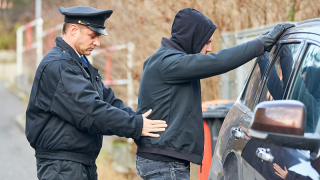
The post Field Sobriety Exercises appeared first on Michael White Esq.

]]>
https://michaelwhiteesq.com.bmgcreative.com/field-sobriety-exercises/feed/ 0
DUI – 10-Day Rule https://michaelwhiteesq.com.bmgcreative.com/dui-10-day-rule/ https://michaelwhiteesq.com.bmgcreative.com/dui-10-day-rule/#respond Tue, 01 Feb 2022 16:27:50 +0000 https://michaelwhiteesq.com.bmgcreative.com/?p=1171 If you have been arrested for DUI in Florida, your license was immediately suspended upon your arrest. You still, however, can drive for 10 days using your DUI-ticket/citation as a “business purposes only” driving permit, which is sometimes referred to as a “hardship license”. A business purposes only permit “means a driving privilege that is …

DUI – 10-Day Rule Read More »

The post DUI – 10-Day Rule appeared first on Michael White Esq.

]]>

DUI – 10-Day Rule

If you have been arrested for DUI in Florida, your license was immediately suspended upon your arrest. You still, however, can drive for 10 days using your DUI-ticket/citation as a “business purposes only” driving permit, which is sometimes referred to as a “hardship license”.

A business purposes only permit “means a driving privilege that is limited to any driving necessary to maintain livelihood, including driving to and from work, necessary on-the-job driving, driving for educational purposes, and driving for church and medical purposes.” Fla. Stat. § 322.27. You can essentially drive to and from, work, school, a house of worship or for medical care, and, if applicable for work.

Fortunately, if you act within these 10 days, you may retain some, or perhaps all, of your driving privileges longer than this 10 day period. If you are a first-time offender you have two options. You can elect to have an administrative hearing – either formal or informal – where a hearing officer determines whether or not the arresting officer had probable cause to arrest you. Upon making this request in writing, you will receive a 42-day business purposes only permit so you can continue to drive until the hearing. If you win the hearing, your driving privileges will be fully restored. If you lose the hearing, you will need to wait either 30 or 90 days before you can get a business purposes only permit. The difference in the waiting times depends on the specifics of your case.

Your second option is to forfeit your right to the administrative hearing for an immediate business purposes only permit that will last throughout your suspension, upon enrollment in DUI School.

If you have a previous DUI conviction, you are ineligible for a “hardship license”, so your only option is the administrative hearing.

The difference between a formal and informal administrative hearing is on the type of evidence that is allowed. In a formal hearing, the parties can call witnesses and present evidence, which often presents an excellent opportunity to collect evidence for the eventual DUI trial. In the informal hearing, the hearing officer essentially examines the arrest paperwork.

An experienced trial attorney can help you navigate through this process, but you must act quickly. If you do not take any of the steps within 10 days, your license will be suspended.

The post DUI – 10-Day Rule appeared first on Michael White Esq.

]]>
https://michaelwhiteesq.com.bmgcreative.com/dui-10-day-rule/feed/ 0
Deferred Prosecution Agreement – Palm Beach County https://michaelwhiteesq.com.bmgcreative.com/deferred-prosecution-agreement-palm-beach-county/ https://michaelwhiteesq.com.bmgcreative.com/deferred-prosecution-agreement-palm-beach-county/#respond Tue, 01 Feb 2022 16:24:52 +0000 https://michaelwhiteesq.com.bmgcreative.com/?p=1166 Palm Beach County – Deferred Prosecution/Pretrial InterventionThe Office of the State Attorney for the 15th Judicial Circuit in Florida (Broward County) offers some defendants accused of committing a misdemeanor a deferred prosecution agreement. This enables an accused to complete certain conditions, such as community service and one’s related to the underlying charge (i.e., drug testing in a drug …

Deferred Prosecution Agreement – Palm Beach County Read More »

The post Deferred Prosecution Agreement – Palm Beach County appeared first on Michael White Esq.

]]>

Deferred Prosecution Agreement – Palm Beach County

Palm Beach County – Deferred Prosecution/Pretrial Intervention
The Office of the State Attorney for the 15th Judicial Circuit in Florida (Broward County) offers some defendants accused of committing a misdemeanor a deferred prosecution agreement. This enables an accused to complete certain conditions, such as community service and one’s related to the underlying charge (i.e., drug testing in a drug possession case or a theft course in a theft case), in order for State to dismiss the charges. Eligibility requirements and approval for entry into MDP will be determined at arraignment.

If you have been accused of committing a misdemeanor in Palm Beach County, call Michael White today to schedule a free, in-depth, consultation. He will try to secure a deferred prosecution agreement, and if you are not eligible, fight your case.

Felonies
The State of Florida regulates felony pretrial intervention. More can be read here.

The post Deferred Prosecution Agreement – Palm Beach County appeared first on Michael White Esq.

]]>
https://michaelwhiteesq.com.bmgcreative.com/deferred-prosecution-agreement-palm-beach-county/feed/ 0
Breath https://michaelwhiteesq.com.bmgcreative.com/breath/ https://michaelwhiteesq.com.bmgcreative.com/breath/#respond Tue, 01 Feb 2022 16:20:14 +0000 https://michaelwhiteesq.com.bmgcreative.com/?p=1165 If a suspect is arrested for DUI in Florida, the arresting officer almost always asks the suspect to submit to a breath test.  If the suspect refuses, the officer must read the suspect Florida’s Implied Consent warning before asking the suspect again.  If the suspect refuses a second time, the suspect’s license will be automatically suspended for one-year if …

Breath Read More »

The post Breath appeared first on Michael White Esq.

]]>

Breath

If a suspect is arrested for DUI in Florida, the arresting officer almost always asks the suspect to submit to a breath test.  If the suspect refuses, the officer must read the suspect Florida’s Implied Consent warning before asking the suspect again.  If the suspect refuses a second time, the suspect’s license will be automatically suspended for one-year if it is a first refusal, and for 18 months and additional misdemeanor charges if the suspect has prior refusal.

If the suspect agrees, at either the first or second request, the suspect will either be taken to a breath testing facility, or a mobile facility will come to the scene. In Florida, breath testing is conducted on a device called an Intoxylizer 8000.

Before conducting the breath test, the breath test operator must observe the suspect for 20 minutes to assure that the suspect has not regurgitated, burped or any other involuntary action that would cause the air deep in the lung to enter the mouth, which would drastically alter the test results to the detriment of the suspect.  After this 20-minute observation period, and after the Intoxilyzer goes through a series of automated steps and makes a bunch of beeping and whirring noises (see Operation, below), does the suspect provide two breath samples.

How it works:
The Intoxilyzer 8000 works by emitting an infrared light into the supplied breath sample.  The instrument then measures the amount of this light that is absorbed by the ethyl alcohol in the sample.  Because the concentration of deep, lung air is directly proportional to the amount of ethyl alcohol in that same person’s bloodstream, the breath test indicates whether the person is over the legal limit.

Operation: the operation of the Intoxilyzer 8000 is governed by law.  In fact, there is a form (Form 37) that delineates the steps that the Breath Test Operator must follow:

  •  All results are reported to three decimal places in g/210L.  The instrument must display READY MODE prior to beginning the breath test.  Push the START TEST button to begin the breath test:
  • Enter Breath Test Operator last name, first name and middle initial at USER prompts.
      • DATE/TIME.  Verify the displayed date and time.  Change if necessary.  Press ENTER.
      • LAST AGENCY INSPECTION DATE.  Verify the agency inspection date displayed.  Press ENTER.
      • CYLINDER LOT#.  Verify the dry gas standard cylinder lot number.  Change if necessary.  Press ENTER.
      • EXPIRATION DATE.  Verify the dry gas standard cylinder expiration date.  Change if necessary.  Press ENTER.
      • OBSERVATION PERIOD BEGAN.  Enter the time the observation period began (at least 20 minutes).
      • SWIPE DL OR PRESS ENTER.  Either swipe the subject’s driver license or identification card or press ENTER.  Enter applicable information as prompted.
      • DIAGNOSTICS CHECK.  The result must be OK.
      • AIR BLANK.  The result must be 0.000.
      • CONTROL TEST.  The result must be between 0.075 and 0.085, inclusive.
      • AIR BLANK.  The result must be 0.000.
      • PROVIDE SAMPLE NOW.  Have the subject provide a breath sample into the instrument.
      • AIR BLANK.  The result must be 0.000.
      • PLEASE WAIT.  The instrument will countdown the time remaining for the wait period.
      • AIR BLANK.  The result must be 0.000.
      • PROVIDE SAMPLE NOW.  Have the subject provide a breath sample into the instrument.
      • AIR BLANK.   The result must be 0.000.

Note:    If there is no 0.020 g/210L agreement between first and second breath samples, the instrument will automatically request a third breath sample as follows:

  • PLEASE WAIT.  The instrument will countdown the time remaining for the wait period.
  • AIR BLANK.  The result must be 0.000.
  • PROVIDE SAMPLE NOW.  Have the subject provide a breath sample into the instrument.
  • AIR BLANK.  The result must be 0.000.
  • CONTROL TEST.  The result must be between 0.075 and 0.085, inclusive.
  • AIR BLANK.  The result must be 0.000.
  • DIAGNOSTICS CHECK.  The result must be OK.

Inspections
All breath testing equipment in Florida must be inspected monthly by the agency that uses the instrument.  Moreover, every instrument is subject to an annual inspection by the Florida Department of Law Enforcement.

Defending a Breath Test
Although the results of a breath test can be the most damaging at trial, persuasive at trial, there are many, many, ways to get them excluded.
Common breath test defenses include:

  • Did the agency comply with inspection rules?
  • Was the breath test operator legally qualified to administer the breath test?
  • Did the operator comply with the 20-minute observation period?
  • Were the two breath samples taken with 15-minutes of each other?
  • Was mouth alcohol present?
  • Was implied consent read to the suspect?

If you have been arrested for DUI in South Florida, and were submitted to breath test, attorney Michael White can help.  You may have numerous defenses to fight the charge and/or minimize the penalties.    Contact him today for a free consultation.

The post Breath appeared first on Michael White Esq.

]]>
https://michaelwhiteesq.com.bmgcreative.com/breath/feed/ 0
Blood https://michaelwhiteesq.com.bmgcreative.com/blood/ https://michaelwhiteesq.com.bmgcreative.com/blood/#respond Tue, 01 Feb 2022 16:18:26 +0000 https://michaelwhiteesq.com.bmgcreative.com/?p=1162 Many misdemeanor DUI cases, particularly those that involve crashes, involve the attempt, and sometimes actual, collection of a suspect’s blood (Fla. Stat. 316.1932(1)(c)).  The State can obtain the results of a blood draw in one of two ways, and this hinges on whether the suspect consents. In a misdemeanor DUI, if the suspect consents to the blood …

Blood Read More »

The post Blood appeared first on Michael White Esq.

]]>

Blood

Many misdemeanor DUI cases, particularly those that involve crashes, involve the attempt, and sometimes actual, collection of a suspect’s blood (Fla. Stat. 316.1932(1)(c)).  The State can obtain the results of a blood draw in one of two ways, and this hinges on whether the suspect consents.

In a misdemeanor DUI, if the suspect consents to the blood draw, then the blood is often referred to as “legal blood”. As a threshold matter, for a trial court to admit legal blood, the State must prove that the officer made the request at a medical facility, such as in a hospital or in the back of an ambulance.  Second, the State must establish that a breath or urine test would have been impractical or impossible.   Third, the State must show that the arresting officer complied with Florida’s Implied Consent Law.  The Implied Consent Law requires the officer to explain the consequences of failing to submit to the blood draw – either a one-year license suspension, or an 18-month one and further misdemeanor charges, if the suspect had previously refused to submit to lawfully requested testing.

If the suspect does not consent, the State can still get the results of any “medical blood”, blood that the treating facility drew, admitted at trial.  To get access to this blood, the State typically issues a subpoena to the medical facility for the medical records of the suspect.  The State must notify the suspect with a “Notice of Intent to Issue Subpoena Duces Tecum, and if the suspect does not object to the subpoena, the records are turned over within a reasonable time (usually about two-weeks).  If the suspect objects, the Court holds a Richardson Hearing, where the State must prove that the medical records are “relevant” to the pending criminal charges, typically an easy hurdle for State to overcome, especially without the help of an experienced attorney.

The requirements for the State to be able to admit medical and legal blood differ.  In fact, individual prosecutors often do not know what they need to prove to admit these two different types of evidence.  This dynamic frequently results in a skilled defense attorney getting the results of a blood draw thrown out – that is, the results are not admissible as evidence in a trial.  The jury never sees them.

DUIs that involve a death or serious bodily injury also often involve blood draws, but pursuant to a different statute than the one that governs misdemeanor DUIs and blood draws (Fla. Stat. 316. 1933). This statute provides law enforcement officers with the right to use “reasonable force” to take blood by force as part of a DUI investigation for impairment or intoxication in cases involving serious bodily injury or death. Recent United States Supreme Court cases have somewhat muddied the waters as whether the police need to obtain a warrant absent the suspect’s voluntary consent.

If you have been arrested for DUI in South Florida, and were subject to a blood draw, or have received a “Notice of Intent to Issue Subpoena Duces Tecum”, attorney Michael White can help.  You may have numerous defenses to fight the charge and/or minimize the penalties.    Contact him today for a free consultation.

The post Blood appeared first on Michael White Esq.

]]>
https://michaelwhiteesq.com.bmgcreative.com/blood/feed/ 0
Constructive Possession https://michaelwhiteesq.com.bmgcreative.com/constructive-possession/ https://michaelwhiteesq.com.bmgcreative.com/constructive-possession/#respond Tue, 01 Feb 2022 14:00:11 +0000 https://michaelwhiteesq.com.bmgcreative.com/?p=1117 In many possession of drug or controlled substance cases, the suspect is often alleged to be in “constructive”, not “actual”, possession.   Actual possession, unsurprisingly, occurs when a suspect is found with contraband on his or her person – that is, in their hand, in a pocket, etc. Constructive Possession occurs when one may infer possession …

Constructive Possession Read More »

The post Constructive Possession appeared first on Michael White Esq.

]]>

Constructive Possession

In many possession of drug or controlled substance cases, the suspect is often alleged to be in “constructive”, not “actual”, possession.   Actual possession, unsurprisingly, occurs when a suspect is found with contraband on his or her person – that is, in their hand, in a pocket, etc.

Constructive Possession occurs when one may infer possession of contraband due to a person’s control over it despite their lack of physical grasp.  Prosecutors must prove two elements beyond a reasonable doubt to establish constructive possession: knowledge and control.  That is, a suspect must know of the contraband’s presence and must have the ability to control it for the State to establish constructive possession.  Importantly, mere proximity to the contraband without knowledge does not establish constructive possession.

If you are charged with a possession crime, we can help you.

The post Constructive Possession appeared first on Michael White Esq.

]]>
https://michaelwhiteesq.com.bmgcreative.com/constructive-possession/feed/ 0